
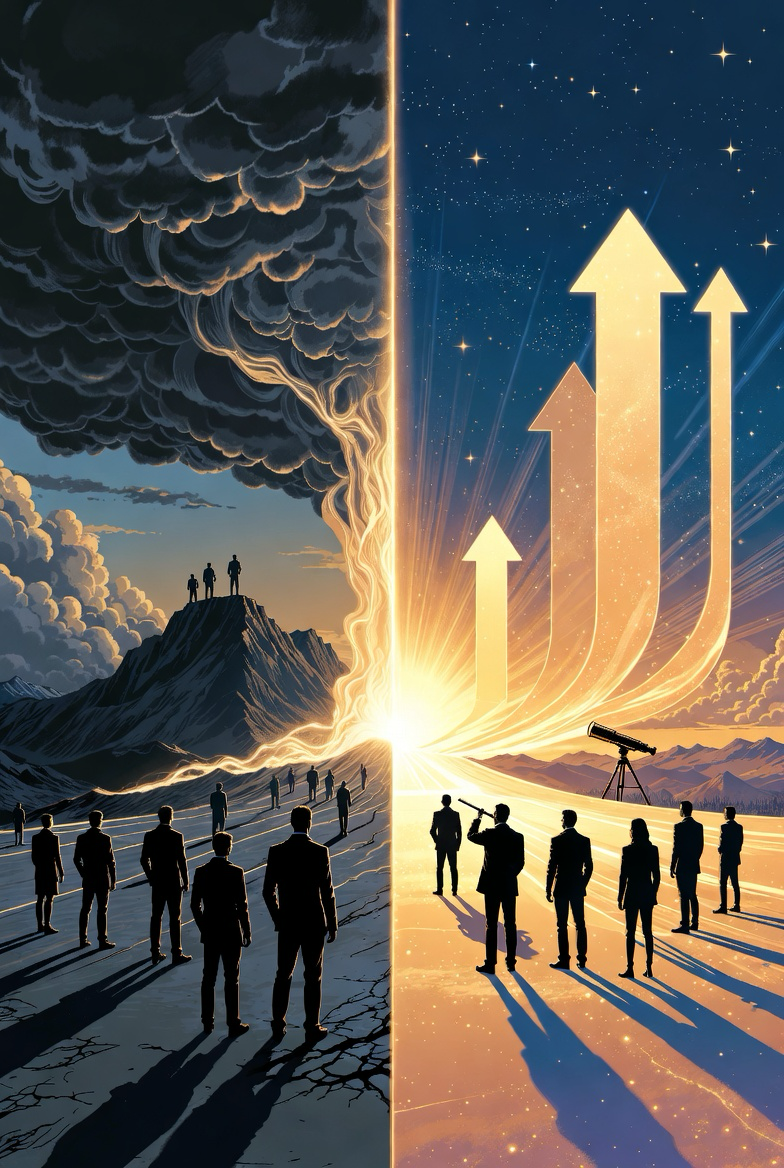
Money tends to arrive after the good returns and leave after the bad ones. Investors pay for that timing.
The mistake
Buying what has done well recently, and selling what has done badly. The news cycle makes it worse: by the time an investment is on every front page, its price already reflects the story, and judging what it is worth gets harder, not easier.
The evidence
Morningstar compares what funds earned with what the investors in them earned, once the timing of their purchases and sales is counted. Over the 10 years to 31 December 2025, investors in US mutual funds and ETFs earned 8.7% a year, while the funds themselves returned 9.9% a year: a gap of about 1.2 percentage points a year. (Morningstar, Mind the Gap 2026)
The fund’s return assumes you held it the whole time. Your return depends on when your money went in and came out. The gap is the cost of the timing.
What to do instead
- Write down why you are buying, in one sentence that does not mention last year’s return.
- Check it against your plan: does it fill a gap in your allocation, or repeat what you already own?
- Set a waiting period in advance for any purchase prompted by the news.
- Let rebalancing do the selling: trimming what has grown past its target and adding to what has fallen is buying low and selling high by rule.
The tool: five questions for any market headline
- Is this news, or a price move described as news?
- What time period is the claim based on, and would a different period change it?
- Is it already reflected in the price?
- Does it change my goals, my timeline or my cash needs?
- If I did nothing, what would happen to my plan?
How this is handled in practice
Portfolios are reviewed on a schedule against the plan, not against the headlines. Investment management is offered through Gwynedd Wealth Partners, LLC.
Series · Ten common investor mistakes
- Whose plan are you following?
- Capacity, willingness and requirement: the three sides of risk
- Too concentrated, or too diversified?
- Why popularity makes value harder to judge
- The best days sit next to the worst days
- What you keep, not what you earn
- Do you know your real return?
- Plans fail quietly
- Five checks before you hand anyone your money
- Your savings rate: the lever you control
This article is for education and is not a recommendation to buy or sell any security. Past performance does not guarantee future results. Investment advisory services are offered through Gwynedd Wealth Partners, LLC.